
Table of Contents
- Understanding Loc Health Fundamentals
- Scalp Wellness for Locs: The Foundation of Healthy Hair
- Establishing Your Loc Maintenance Schedule
- Recognizing Signs of Loc Thinning and When to Seek Help
- Professional Maintenance Techniques and Tools
- Common Mistakes to Avoid in Loc Care
- Building a Relationship With Your Loctician
- Frequently Asked Questions
Last Updated: October 2, 2026
Understanding Loc Health Fundamentals
Maintaining loc health with professional guidance is the foundation of sustainable, vibrant locs that last for years. When you understand what healthy locs actually require, from scalp wellness to proper moisture balance, you shift from reactive fixes to proactive care. This isn't just about washing and conditioning. It's about building a relationship with someone trained to assess your specific hair needs and guide you through the decisions that matter most.
Your locs are a long-term commitment. They reflect the care you invest in them, the products you choose, and the expertise you access. Many people discover too late that they've been doing things that slowly damage their locs, using the wrong products, retwisting too aggressively, or ignoring early warning signs of thinning. By the time they seek professional help, the damage compounds.
At TRES BEAUX, we work with clients who've struggled with buildup, dryness, and scalp issues for months or years before finding solutions that actually work. The difference between struggling and thriving often comes down to understanding the fundamentals and having professional guidance to adjust your approach as your locs mature.
Scalp Wellness for Locs: The Foundation of Healthy Hair
Your scalp is where everything begins. Locs sit directly on the scalp, trapping moisture and creating an environment where buildup accumulates faster than it does with loose hair. This is why scalp wellness for locs requires a different approach than general hair care.
Many people treat scalp issues as purely cosmetic, flaking, itching, excess oil. In reality, these are signals that your scalp environment needs adjustment. When your scalp is unhealthy, your locs suffer. They become brittle, thin, and prone to breakage. When your scalp is balanced, your locs grow stronger and last longer.
Addressing Buildup and Residue
Product buildup and residue are the most common scalp issues for people with locs. Shampoo residue, conditioner buildup, oils, dead skin cells, and environmental debris accumulate around the base of each loc and on the scalp itself. Regular shampooing alone cannot reach these deposits, they sit deep within the loc structure and against the scalp.
The Pre-Cleanse Scalp Gel from TRES BEAUX is designed specifically for this problem. Applied directly to the scalp before shampooing, it helps loosen buildup and residue so your wash is more effective. Let it sit for 5-15 minutes, gently work through areas of buildup, then rinse and follow with shampoo. This two-step approach removes what shampoo alone cannot reach.

Without this targeted step, buildup compounds over time. Your scalp becomes irritated, your locs become heavy and dull, and you're fighting an uphill battle with moisture and follicle health.
Maintaining pH Balance and Follicle Health
Your scalp maintains a natural pH balance around 4.5-5.5, slightly acidic (The Shampoo pH can Affect the Hair: Myth or Reality?). This pH protects your scalp from bacteria and fungal growth while supporting healthy sebum production. Many commercial shampoos are too alkaline, disrupting this balance and causing dryness, irritation, and flaking.
When pH balance is maintained, your scalp produces sebum at a healthy rate. This sebum distributes through your locs, protecting the hair shaft and supporting natural hydration. When pH is disrupted, your scalp either produces excess oil (trying to compensate) or becomes dry and irritated.
The Clarity Scalp Tonic from TRES BEAUX is formulated with ingredients like White Willow Extract and Zinc PCA to help refresh the scalp and support pH balance without relying on heavy oils. For sweaty scalps or buildup-prone scalps, this lightweight refresh between wash days keeps your scalp environment stable. Apply it directly to the scalp as needed, especially after sweating or whenever your scalp needs a refresh.
Establishing Your Loc Maintenance Schedule
A consistent loc maintenance schedule is what separates locs that thrive from locs that deteriorate. Many people treat maintenance as something to do "whenever it feels necessary," which usually means they're reacting to problems rather than preventing them.
Your maintenance schedule depends on several factors: your hair texture, the thickness of your locs, how fast your roots grow, and your lifestyle. A professional loctician can assess these factors and recommend a schedule that works for your specific situation.
Retwisting and Root Maintenance
Retwisting is the most visible maintenance task, but it's also where many people make mistakes. Retwisting too frequently can cause thinning and breakage. Retwisting too infrequently allows roots to become loose and locs to unravel. The right frequency depends on your hair type and growth rate.
Most people benefit from retwisting every 4-8 weeks. Between professional retwists, you can maintain your roots at home with palm rolling, a technique where you roll the loc between your palms to tighten the root. Palm rolling takes just a few minutes per loc and keeps roots tight without the stress of a full retwist.
Professional retwisting techniques like palm rolling, interlocking, and crocheting each serve different purposes.
Complete Loc Mastery — 2 Day In-Person Training →
Moisture and Hydration Routines
Locs are prone to dryness because natural oils don't distribute evenly through the loc structure the way they do with loose hair. This means you need a deliberate hydration routine, not just occasional conditioning.
A basic hydration routine includes:
- Wash your locs with a clarifying shampoo every 2-4 weeks to remove buildup
- Deep condition after each wash, focusing on the mid-shaft and ends
- Use a leave-in conditioner between washes to maintain moisture
- Apply lightweight scalp oil or hydrating products to the scalp and roots
Recognizing Signs of Loc Thinning and When to Seek Help
Loc thinning is one of the most common problems people face, and it's also one of the most preventable. The early signs are easy to miss if you're not looking for them.
Professional Maintenance Techniques and Tools
Professional maintenance goes beyond what you can do at home. A trained loctician has the tools, technique, and experience to assess your locs and perform maintenance that prevents damage while keeping your locs healthy and looking polished.
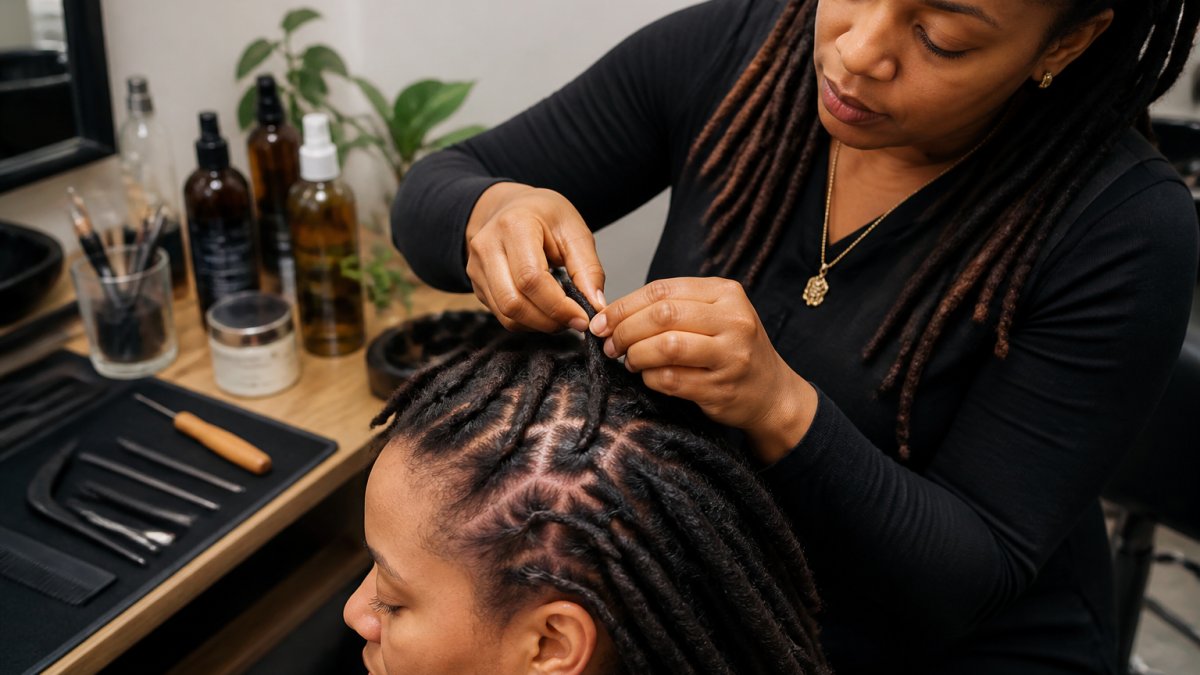
Palm Rolling, Interlocking, and Crocheting
These three techniques form the foundation of professional loc maintenance. Each serves a specific purpose and requires different skill levels.
Detox Treatments and Deep Cleansing
Detox treatments are intensive scalp and loc cleanses designed to remove heavy buildup that regular shampooing cannot reach. These treatments use specialized formulations and techniques to dissolve product residue, excess oils, and environmental debris.
Common Mistakes to Avoid in Loc Care
Understanding what not to do is as important as knowing what to do. Many of the most common loc problems stem from well-intentioned mistakes.
Building a Relationship With Your Loctician
Your loctician is not just a service provider, they're a partner in maintaining your locs. A good loctician understands your hair, remembers your preferences, and can spot problems before they become serious.
When you're looking for a loctician, seek someone who:
- Takes time to assess your locs and ask about your routine
- Explains what they're doing and why
- Recommends products based on your specific needs, not what they have in stock
- Is honest about what can and cannot be fixed
- Follows up and adjusts recommendations based on results
Frequently Asked Questions
How often should you see a professional for loc maintenance?
Most professionals recommend scheduling maintenance every 4-6 weeks, depending on your hair type, growth rate, and the retwisting method used. Interlocking and crocheting may allow longer intervals between appointments, while palm rolling typically requires more frequent visits. A professional loctician can assess your hair's growth pattern and recommend a schedule tailored to your needs during your consultation.
What are the signs that your locs need professional intervention?
Watch for excessive breakage, unusual thinning at the roots, persistent scalp irritation, or buildup that home care cannot remove. If your locs feel dry and brittle despite regular hydration routines, or if you notice unraveling or weak spots, these are clear signals to book a professional appointment. A loctician can diagnose whether the issue is maintenance-related or requires specialized repair techniques like crocheting.
How does maintaining a loc maintenance schedule prevent damage?
A consistent maintenance schedule keeps your roots tight, prevents excessive tension on the hair shaft, and catches problems early before they become severe. Regular retwisting distributes stress evenly across the loc, maintains proper density, and supports scalp health by preventing buildup. Professional guidance ensures your maintenance routine matches your hair's needs, reducing breakage and extending the life of your locs significantly.
What is the difference between routine home care and professional loc maintenance?
Home care focuses on cleansing, hydration, and scalp wellness using products and techniques you can perform yourself. Professional maintenance involves specialized retwisting methods (palm rolling, interlocking, crocheting), deep detox treatments, and structural repairs that require skill and precision. While home care keeps locs healthy between appointments, professional services address root tightening, buildup removal, and damage prevention that cannot be replicated at home.
Why is professional retightening safer than DIY methods?
Professional locticians understand hair density, growth patterns, and tension requirements specific to your hair type. Improper DIY retightening can cause excessive tension, breakage, and scalp damage. Professionals use techniques like interlocking and crocheting with precision, protecting your hair shaft and follicle health. They also recognize when your hair needs breaks from certain methods or when alternative techniques would better serve your hair's current condition.
Can professional loc services help with scalp conditions like dermatitis?
Professional locticians can identify whether scalp irritation stems from product buildup, improper maintenance, or an underlying dermatological condition. If a medical issue is suspected, they can recommend consultation with a dermatologist. However, many scalp problems improve significantly with proper cleansing, balanced moisture, and professional-grade products designed for scalp wellness. Services like pre-cleanse treatments and clarifying protocols address buildup-related irritation effectively.
