

Table of Contents
- Why Oil Alone Won't Hydrate Locs (And What Does)
- How to Moisturize Dry Locs With the Right Oil
- Best Lightweight Oil for Locs: What to Look For
- Preventing Loc Buildup: Why Less Oil Is More
- Oils for Scalp Health: Calming Dryness and Flaking
- DIY Oil Blends vs. Professional Loc Care Products
- How Climate and Age Affect Loc Hydration
- Conclusion
- Frequently Asked Questions
Last Updated: September 29, 2026
Why Oil Alone Won't Hydrate Locs (And What Does)
Here's the truth most product labels won't tell you: the best oil for loc hydration doesn't actually hydrate anything. Oil seals moisture in. Water provides it. Skip the water step and you're just coating dry hair in a shiny layer that traps nothing.
Water-Based Hydration vs. Oil Sealing
Water-based hydration means adding actual water to your locs. You do this by misting, washing, or steaming. Oil sealing means locking that water in before it evaporates.
The order matters:
- Mist your locs with water first
- Let the water absorb for a minute
- Apply oil to seal it in
How Hair Porosity Changes What Your Locs Need
Hair porosity describes how easily your hair absorbs and holds moisture. High-porosity hair has open cuticles. It drinks water fast but loses it just as quickly. Low-porosity hair has tightly closed cuticles. Water sits on top unless you help it in.
How to Moisturize Dry Locs With the Right Oil
The best way to moisturize dry locs is a four-step routine: cleanse, mist, seal, protect. It puts water where it belongs, then holds it there with oil.
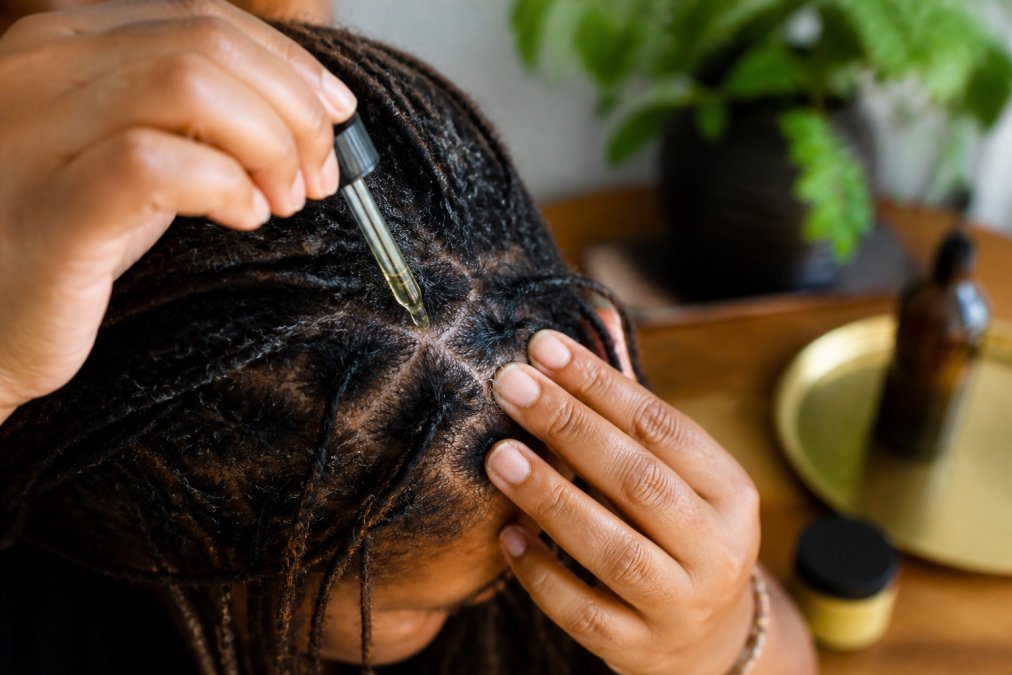
A Step-by-Step Routine for Dry, Brittle Locs
- Cleanse with a residue-free shampoo to clear buildup
- Mist your locs with warm water until damp, not soaked
- Apply a lightweight oil to your scalp and along each loc
- Cover with a satin bonnet or scarf to lock in moisture overnight
Do this two to three times per week. Adjust based on how dry your locs feel.
Best Lightweight Oil for Locs: What to Look For
The best lightweight oil for locs absorbs quickly, won't clog your scalp, and carries a low comedogenic rating. Jojoba, sweet almond, and grapeseed fit that description.
What makes them work:
- Small molecular size for easier absorption
- Low comedogenic rating to avoid clogged pores
- Natural vitamin content that supports scalp health
Preventing Loc Buildup: Why Less Oil Is More
Preventing loc buildup comes down to one rule: use less product, more often. Buildup forms when oil, dead skin, and product residue collect inside the loc shaft where washing can't reach. The harder question is how to get that residue out once it's trapped.
Why Oil Traps Inside Locs
A loc is a porous, layered structure. As new growth mats and buds, the interior becomes a dense channel that surface shampoo can't penetrate. Oil applied near the root wicks inward and stays there, mixing with sebum, shed skin cells, lint, and leftover conditioner to form a waxy plug. Water alone can't dissolve it because oil and water don't mix, which is why a loc can feel greasy at the core while looking dry outside.
Signs you're using too much oil:
- White flakes near the roots
- Dull, heavy-feeling locs
- An itchy scalp that doesn't improve after washing
- A faint sour or rancid smell when locs are damp
- Locs that feel stiff at the core but soft at the tip
A Safe Buildup-Removal Protocol
You do not need to cut or comb out locs to remove residue. A staged approach works for most people:
- Pre-soak. Fill a basin with warm water and a little clarifying shampoo. Submerge the locs for 10-15 minutes to soften the waxy plug so the next step can lift it.
- Clarify with a residue-free shampoo. Work it down each loc from root to tip with your fingertips, not your palms. Avoid "moisturizing" formulas here, they add back the oils you're removing.
- Use an apple cider vinegar rinse sparingly. A diluted rinse (roughly one part vinegar to four parts water) strips mineral and product film. Rinse thoroughly, and don't repeat more than once a month; vinegar is acidic and overuse can dry the scalp.
- Rinse with warm, not hot, water. Hot water swells the cuticle and can push residue deeper.
- Air-dry completely before re-oiling. Re-oiling damp locs traps the water you just used to clean them.
Comedogenic Ratings and What They Mean for Your Scalp
Comedogenic ratings run from 0 to 5: zero won't clog pores, five likely will. For loc wearers, oils rated 0-2 keep the scalp clearer and reduce the residue load inside each loc.
| Oil | Comedogenic Rating | Best For | Notes |
|---|---|---|---|
| Jojoba | 2 | Daily sealing | Closest to scalp's natural oil; liquid wax ester, so it absorbs rather than coats |
| Grapeseed | 1 | Lightweight sealing | Absorbs fast; good for oily scalps |
| Sweet almond | 2 | Dry, brittle locs | Good for high porosity |
| Coconut | 4 | Pre-wash treatment | Can clog pores; solid at room temperature, so it re-hardens inside locs |
| Castor | 2 | Thickening | Heavy and viscous; use sparingly and never at the root |
How to Read the Rating Against Your Scalp
A low comedogenic rating doesn't automatically mean an oil is right for you. Pair it with your scalp type:
- Oily or acne-prone scalp: stay at 0-1. Grapeseed and jojoba are the safest daily choices.
- Normal scalp: 0-2 works. Rotate two oils rather than layering many.
- Dry or flaky scalp: 2-3 is acceptable as a weekly treatment, but still avoid 4-5 at the root.
- Sensitive or reactive scalp: patch-test any new oil on the inner forearm for 24 hours before applying to the scalp.
Oils for Scalp Health: Calming Dryness and Flaking
Oils for scalp health do two jobs: soothe irritation and support the skin barrier. Tea tree, peppermint, and lavender essential oils work well diluted in a carrier oil.
For scalp dryness:
- Dilute 2-3 drops of essential oil in 1 tablespoon of carrier oil
- Massage into the scalp with fingertips
- Leave for 20 minutes before washing out
DIY Oil Blends vs. Professional Loc Care Products
DIY oil blends give you control over ingredients; professional products give you tested formulas and consistent results. Both work, but suit different needs.
DIY blends work best when:
- You know your porosity and scalp type
- You want to avoid specific ingredients
- You enjoy customizing your routine
Professional products work best when:
- You're dealing with stubborn buildup
- Your scalp has ongoing issues
- You want a formula developed by someone with hands-on loc experience
How Climate and Age Affect Loc Hydration
Climate and age change what your locs need. Dry winters pull moisture out faster, humid summers make heavy oils feel greasy, and mature locs hold moisture differently than starter locs. Understanding the mechanism tells you whether to reach for a humectant, a sealant, or both.
Humectants vs. Sealants: The Core Distinction
A humectant draws water from the air into the hair, glycerin, honey, and aloe vera are common examples. A sealant sits on top and slows water loss; jojoba, grapeseed, and castor are sealants.
- Humid air (roughly 60% relative humidity and above): humectants pull moisture in, which is helpful. Sealants applied heavily can feel greasy and trap sweat against the scalp.
- Dry air (roughly 30% relative humidity and below): humectants reverse direction. They pull water out of the hair and into the drier air. This is why glycerin-heavy products can leave locs feeling brittle in winter.
- Indoor heating: forced-air heating can drop indoor humidity into the teens even when it's mild outside. If your locs feel dry indoors but fine outdoors, the building is the problem, not your routine.
A Climate-Adjusted Routine
| Condition | Mist | Seal With | Frequency |
|---|---|---|---|
| Cold, dry winter (outdoor) | Warm water mist | Jojoba or sweet almond | 3-4x per week |
| Indoor heating, low humidity | Warm water mist + light leave-in | Jojoba | Daily if needed |
| Hot, humid summer | Cool water mist | Grapeseed (light) | 2x per week |
| Coastal or high-humidity | Cool water mist | Minimal; skip heavy oils | 1-2x per week |
| Arid or high-altitude | Warm water mist | Castor blended with jojoba | 4x per week |
If you don't own a hygrometer, most phones and smart-home devices report local humidity. Checking it before you oil is more useful than following a fixed schedule.
How Loc Maturity Changes the Equation
Starter, mature, and thinning locs are three different hydration problems, and treating them the same is a common mistake.
When to Change Your Routine
Reassess every season and whenever your scalp or locs change noticeably. If you've moved, changed your indoor heating, or noticed new dryness or flaking, the old routine may now work against you. Adjust one variable at a time, oil weight, misting frequency, or clarifying schedule, so you can tell what helped.
Conclusion
Dry, brittle locs are frustrating but fixable. The key: water hydrates, oil seals, and both must work together.
Frequently Asked Questions
What is the best oil to use for hydrating locs?
Lightweight oils like jojoba, sweet almond, and grapeseed absorb without leaving heavy residue, making them ideal for loc hydration. Jojoba closely mimics the scalp's natural sebum, so it conditions without clogging the hair shaft. For mature locs, a blend of jojoba and a few drops of lavender essential oil supports moisture retention and scalp health. Always apply oil to damp locs after misting with water, since oil seals in hydration rather than creating it.
Does oil actually hydrate locs or just seal in moisture?
Oil does not hydrate locs on its own. It acts as a sealant, coating the hair shaft to slow water loss after you mist or wash your locs. Without water-based hydration first, oil sits on the surface and can contribute to buildup over time. The most effective routine pairs a water or aloe-based mist with a lightweight carrier oil applied while the locs are still damp, which locks in moisture and supports moisture retention throughout the week.
How often should you oil your locs for maximum hydration?
Most loc wearers benefit from oiling once or twice a week, depending on scalp dryness, climate, and porosity. Oiling daily can overwhelm the scalp and lead to buildup, especially with heavy oils. If you live in a dry or cold climate, a mid-week refresh with a water-based mist followed by a few drops of lightweight oil helps maintain hydration. Starter locs typically need less oil than mature locs because the scalp's natural oils travel more easily through looser hair.
How do I prevent product buildup when using oils on locs?
Preventing loc buildup starts with choosing lightweight, non-comedogenic oils and applying them sparingly to the scalp and roots rather than the full length of each loc. Heavy oils like castor and coconut can accumulate inside the loc shaft and are difficult to wash out. Use a clarifying wash every four to six weeks, avoid layering multiple products, and consider a professional detox if residue has already hardened. Consistent, light application keeps locs hydrated without residue.
